1 tuote lisätty ostoskoriin











From poolside to the silver screen - the tank top's journey to wardrobe classic
From the practical tank suits of the swimming pool in the early 1900s, through the military and working-class long johns, to Hollywood's symbol of raw masculinity and relaxed style. Few garments have undergone a transformation as pronounced as the tank top. We trace the journey of this piece through the decades and take a closer look at the 1950s – the decade when actors like Marlon Brando and James Dean changed the perception of the tank top from a concealed undergarment to an essential part of the modern wardrobe.
Kuvat: Alamy & Patrik Hagborg
Teksti: Ebba Thanner
From Swimming Tanks in the 1910s
The history of the tank top begins within the bathing and sports culture of the early 20th century. The term tank top originates from the so-called tank suits – sleeveless swimsuits that were used in the era's swimming tanks, the contemporary name for public swimming pools.
Unlike earlier, more covering swimwear, swimsuits gradually began to feature narrower straps and more open armholes to provide increased mobility in the water. The sleeveless design was not about style, but about function – less fabric allowed for greater freedom of movement and made the garment better suited for physical activity. Simply put, it was a piece developed for sports, swimming, and movement – long before it became a garment that attracted style enthusiasts.
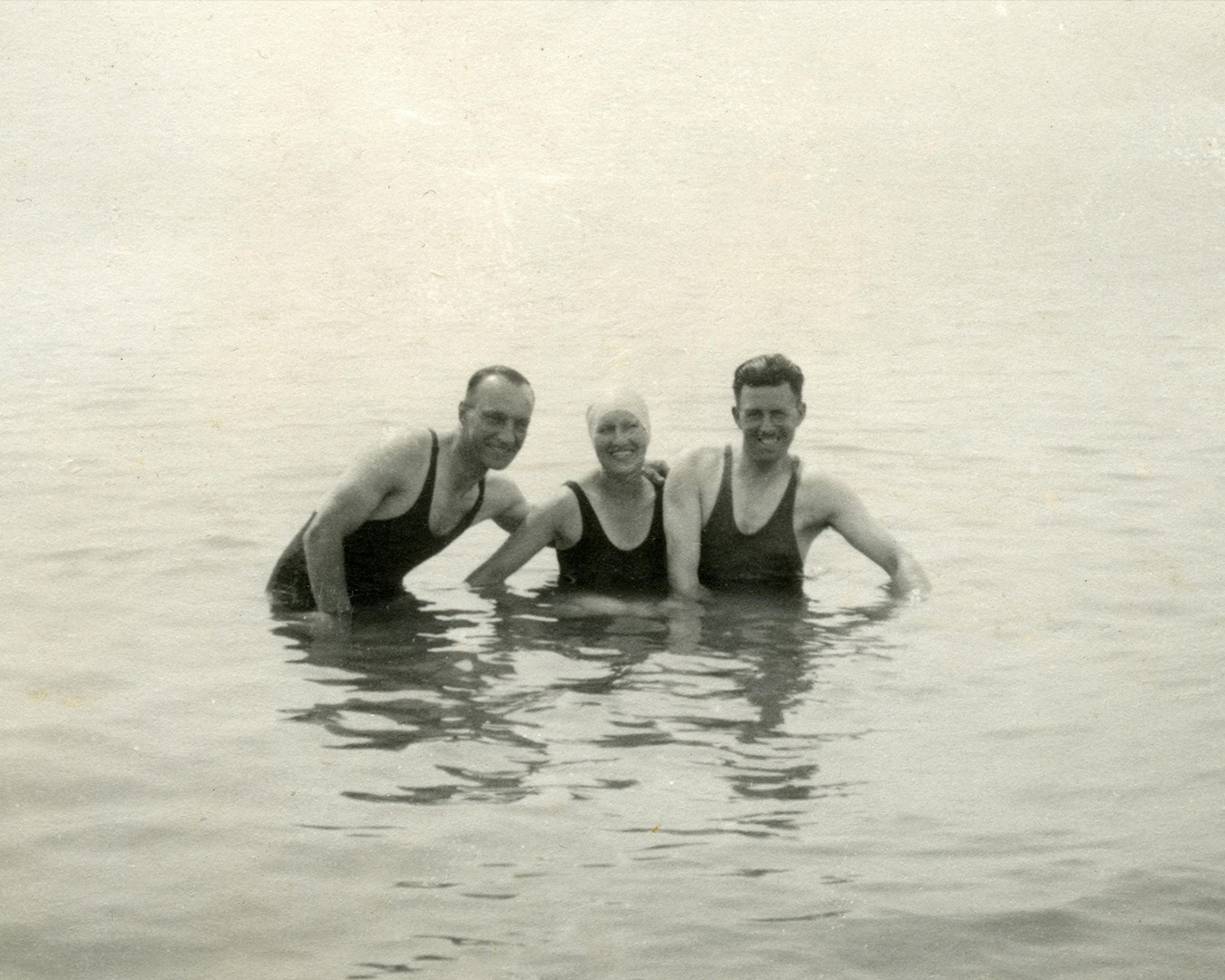
Swimmers in so-called tank suits during the early 1900s. These sleeveless swimwear pieces were developed for function and freedom of movement long before the tank top became an essential part of men's fashion.
A garment for factories, ports, and the military
During the 1920s and 30s, the tank top gradually left swimming pools and instead became a part of everyday life as an undergarment. The tank top was worn by factory workers, dockworkers, and the military, where its sleeveless construction made it practical under shirts and uniforms.
Despite its prevalence, the tank top was still something that rarely saw the light of day. It belonged to the private sphere – a functional layer closest to the body rather than a garment to be showcased. The association with the working class and labor would continue to shape the garment's cultural identity for a long time to come.
This is also evident in the world of film. In The Sting (1973), set during the Great Depression of the 1930s, Paul Newman wears the tank top with a relaxed nonchalance that captures the garment's role during the period – simple, functional, and closely linked to American everyday life.
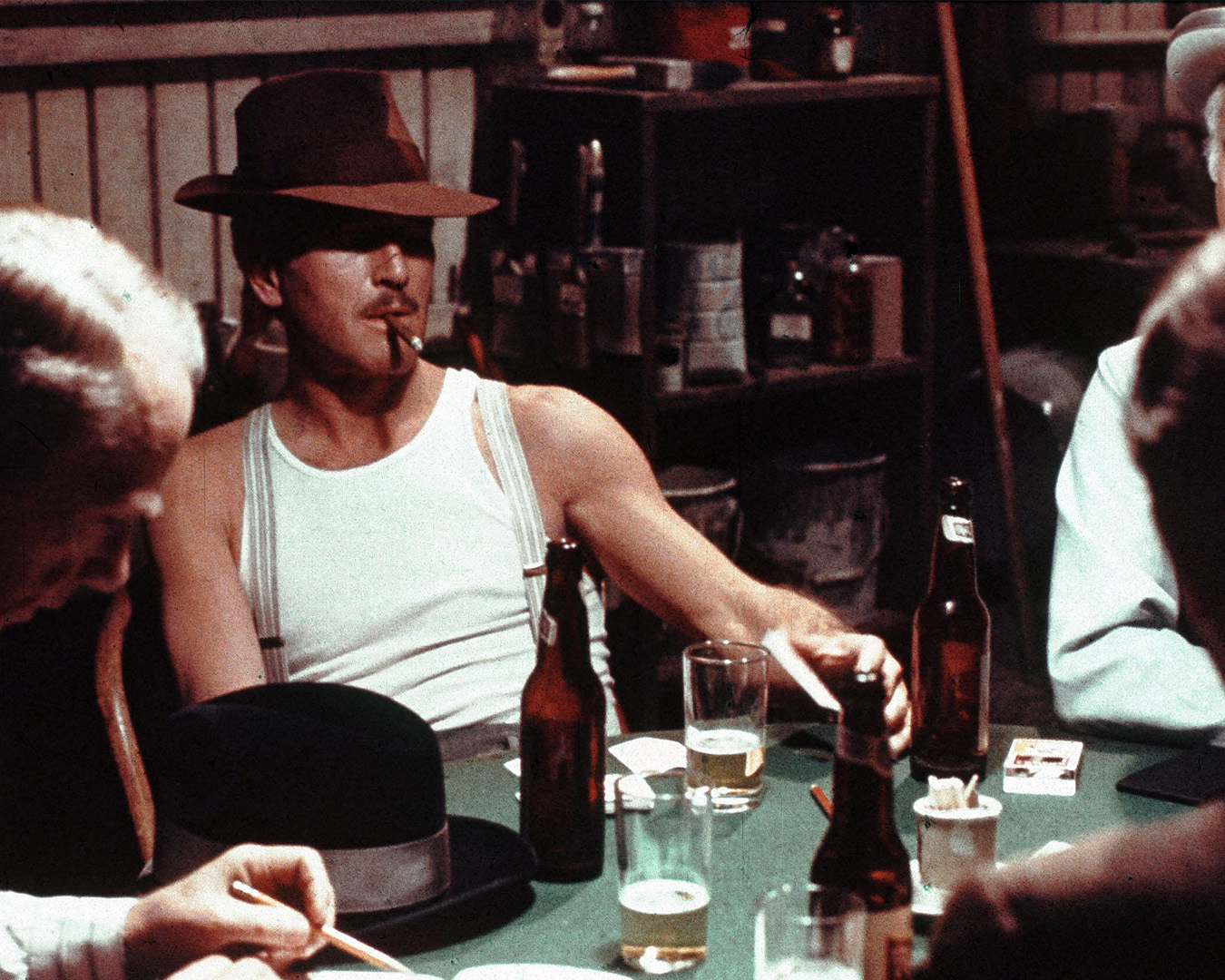
Paul Newman in The Sting (1973), a film set in the 1930s.
From Base Layer to Leading Role on the Silver Screen
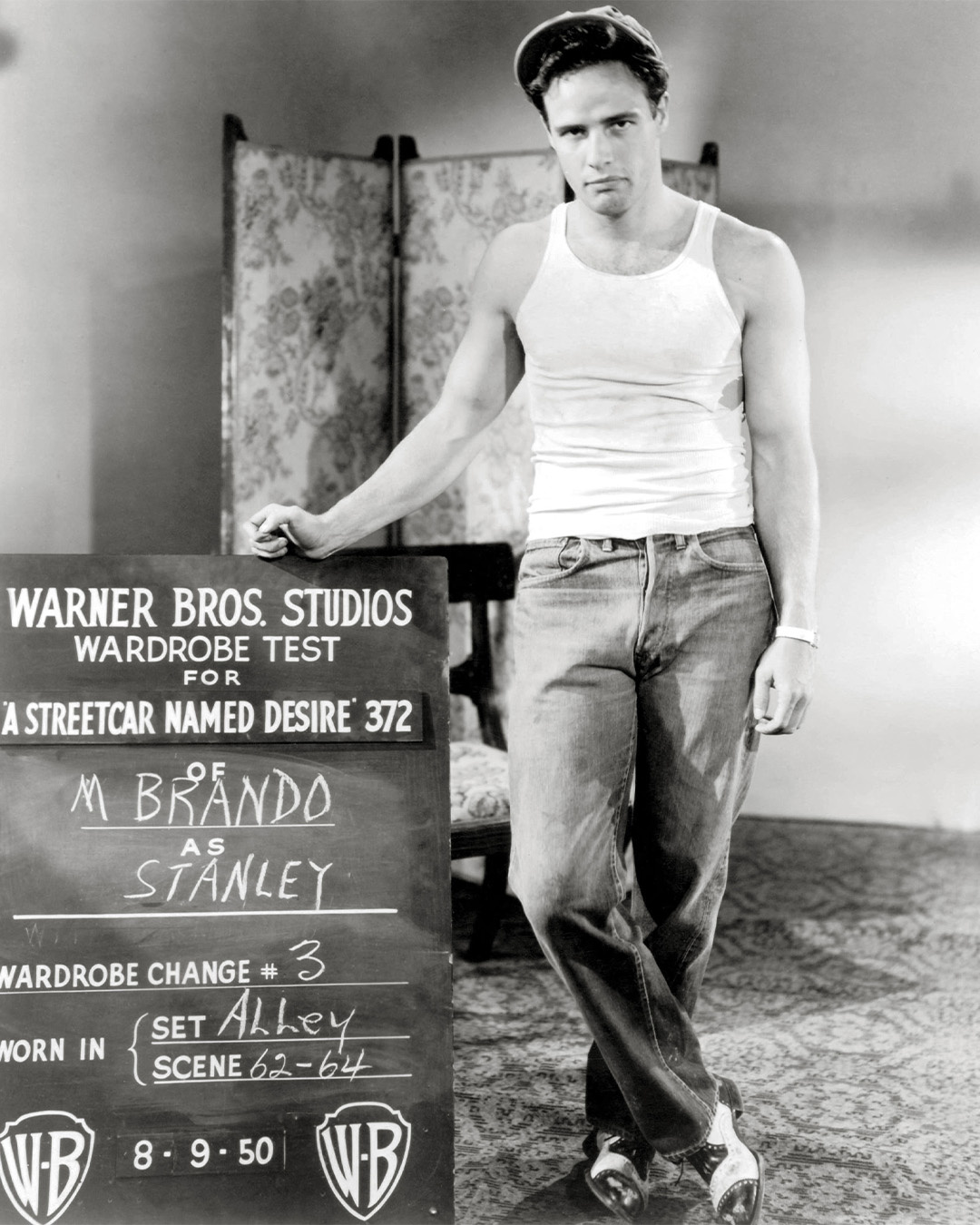
During the 1950s, a significant shift occurred – one that truly transformed the undershirt from a functional base layer into a garment imbued with cultural significance and a clear identity. What had once been worn by swimmers, soldiers, and factory workers was now seen on the silver screen through film stars like Marlon Brando, James Dean, and Alain Delon – men who came to define a new type of masculinity where simple everyday garments were charged with attitude, sensuality, and style.
In A Streetcar Named Desire (1951), Marlon Brando delivered perhaps the most iconic interpretation of the undershirt in film history through his role as the fiery and working-class Stanley Kowalski. The undershirt became an extension of his raw and physical presence, far removed from the polished elegance that had previously dominated male fashion in film. The garment no longer signaled merely function, but also confidence and a more relaxed ideal of male style.
Marlon Brando in A Streetcar Named Desire (1951).
In the 1980s, the tank top took on yet another new role in popular culture. In Die Hard (1988), Bruce Willis wore the white tank top for much of the film, making it a symbol of a new kind of action hero – less polished, more physical, and significantly more human than the film ideals of previous decades. While the tank tops of the 1950s signified rebellious sensuality, the 1980s version came to be associated with durability and realism.
When the Fashion World Embraced the Tank Top
Interestingly, it took a long time for the tank top to be fully accepted by the fashion world. Despite its breakthrough through actors on the silver screen, the garment remained associated with work, sports, and base layers rather than high fashion for a long time. At the same time, it continued to reappear through various eras and expressions – from rebellious rock’n’roll aesthetics to relaxed Riviera style during the 1960s and 70s.
In the 1990s, however, the tank top gained a clearer place within the more refined men’s fashion. The minimalist style of fashion houses like Giorgio Armani and Calvin Klein gave the garment a new role, worn alongside soft suits, leather jackets, and streamlined silhouettes. The tank top was no longer just a functional base layer, but a conscious part of a more relaxed and confident way of dressing.
Since then, the tank top has continued to resurface in both the fashion world and popular culture – from 1990s style icons like Brad Pitt and Johnny Depp to today’s minimalist men’s fashion. Despite the fact that the garment has changed very little over the years, it continues to be referenced by new generations and styles.
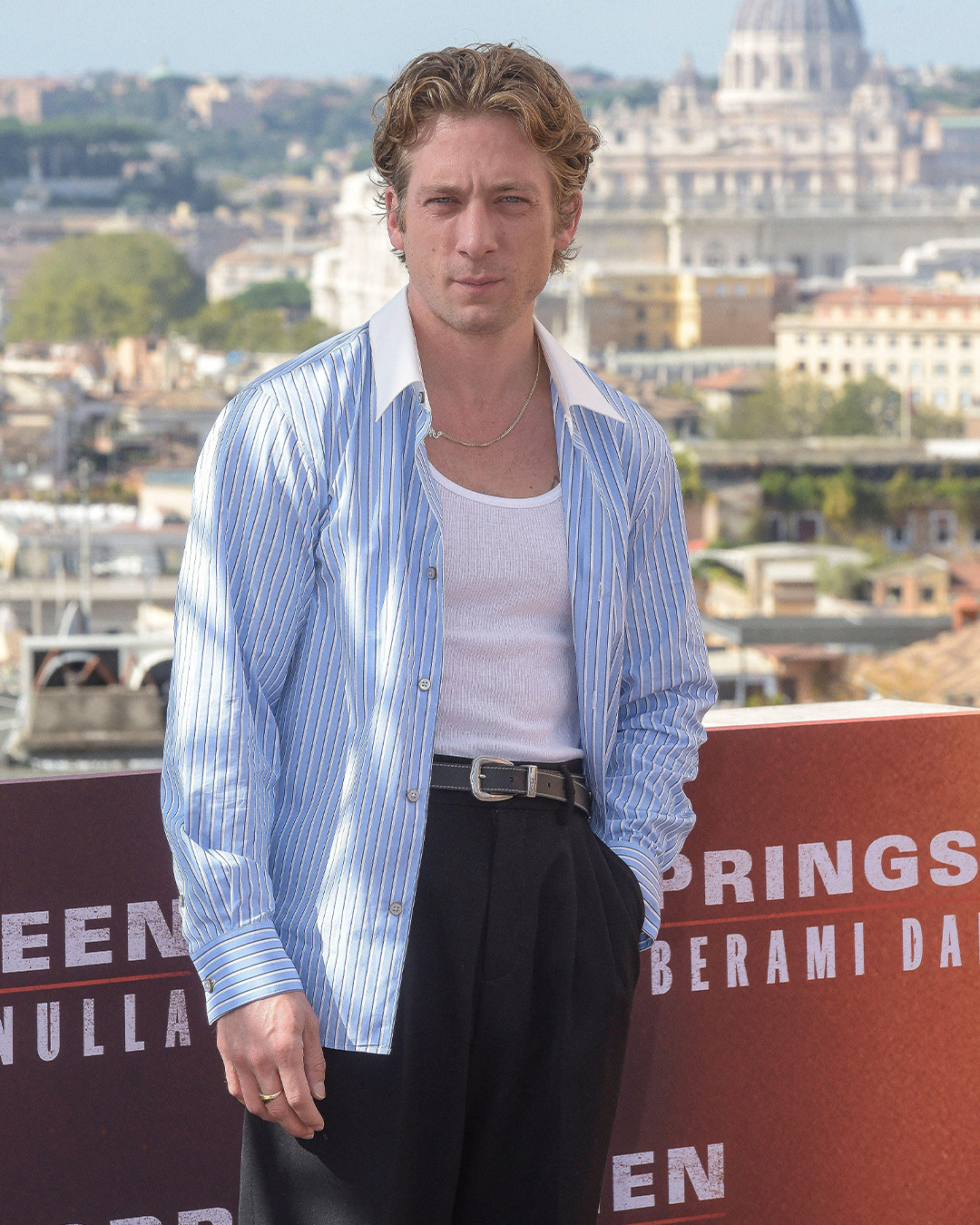
Jeremy Allen White in a white ribbed tank top, styled with high-waisted suit trousers, an open striped shirt, and a slim leather belt – a relaxed yet thoughtful interpretation of how the tank top has become an essential part of modern men's fashion.
How to Style the Tank Top
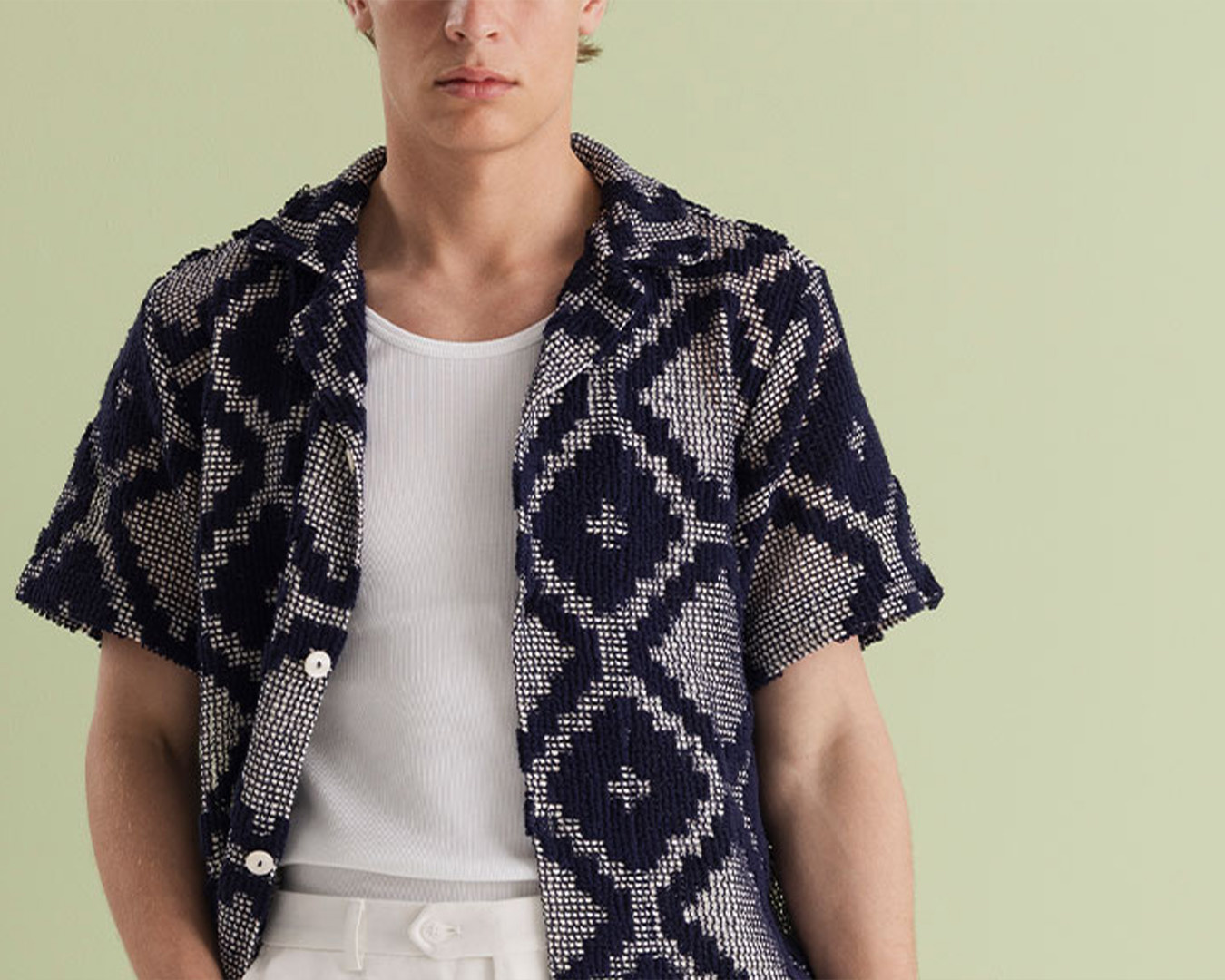
Perhaps that is precisely where the strength of the tank top lies – in its simplicity. Just like the white t-shirt, it is a garment that can be worn in countless ways depending on the context and personal style. At the same time, there is something a bit bolder about the tank top. Where the t-shirt often feels obvious and neutral, the tank top is more direct – a piece that reveals more and therefore requires a bit more confidence from the wearer.
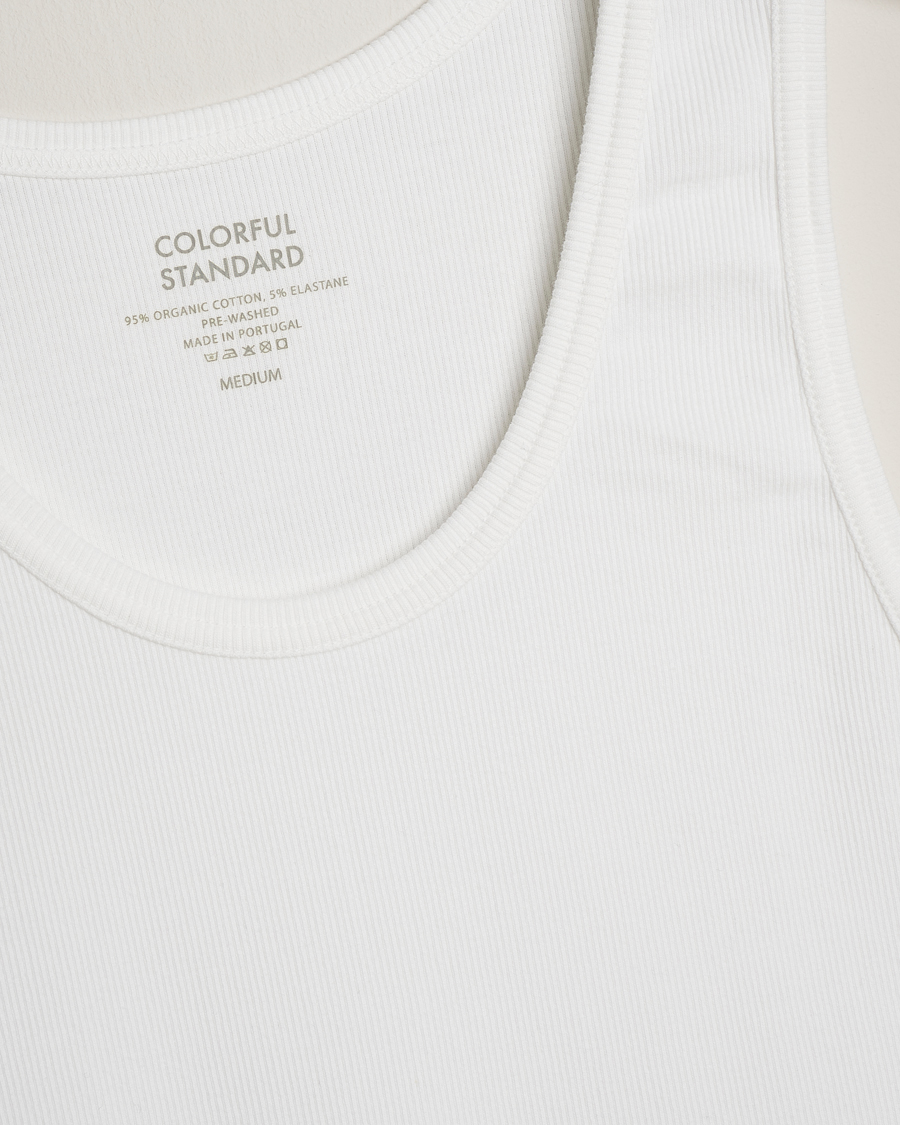
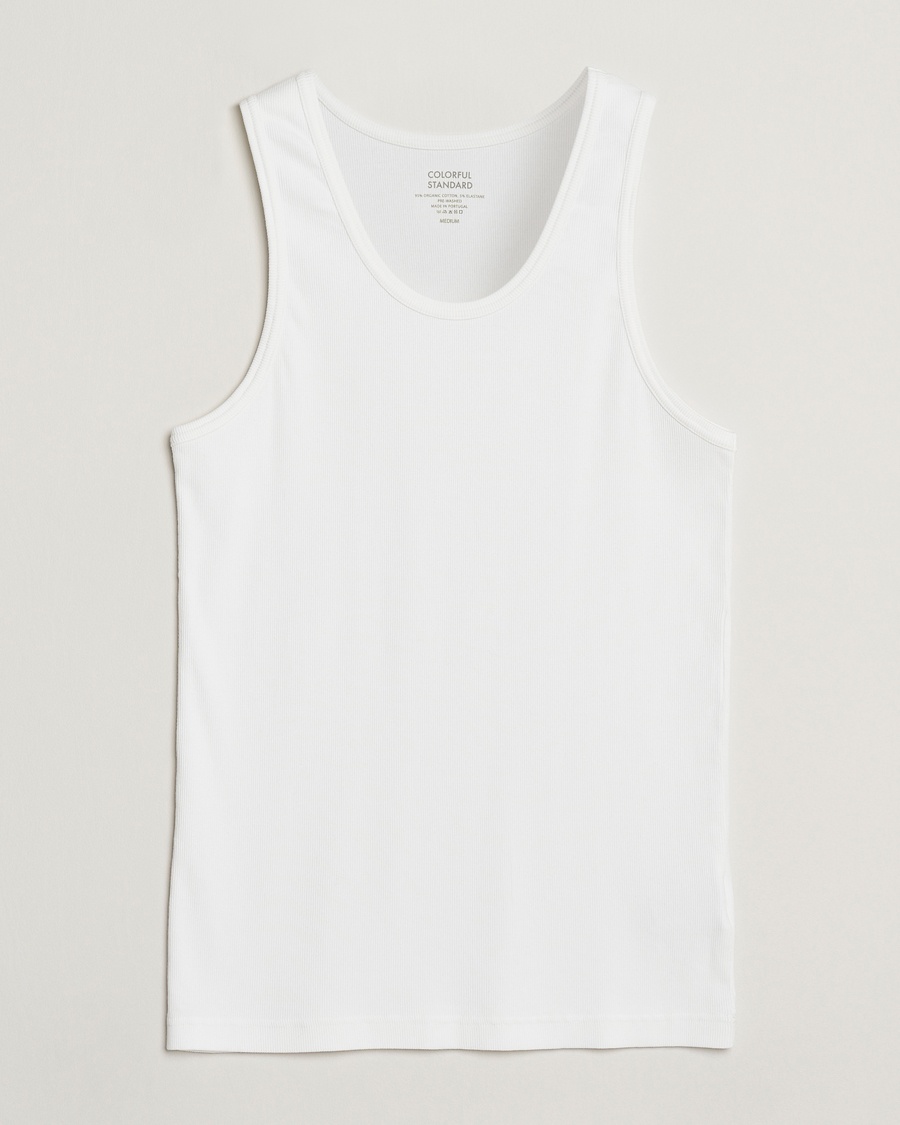
The tank top is just as naturally worn with jeans and sneakers as it is under an open shirt or paired with tailored garments and a blazer. A white ribbed tank top under a suit can lend a more relaxed expression to an otherwise dressed-up look. Perhaps it is that very contrast that has made the piece so timeless – the balance between something stripped-down, confident, and almost a little rebellious.
More than a hundred years after its initial years by swimming pools and workplaces, the tank top continues to be one of the most uncomplicated pieces in the men's wardrobe – always relevant, regardless of generation or style ideal.
Liittyvä lukeminen
-
The Return of the Henley
-
Alain Delon – the movie star who became a style icon for generations
-
Pieces that will stay with you for life
-
The style and watches of The Gentlemen season 2
-

The Watches in The Gentlemen (and What They Say About The Characters)
-
The Watches in Succession (and What They Say About the Characters)